
Follow the DASH Diet to Manage Hypertension
Almost every Pakistani family has someone on blood pressure medication. A father, a mother, an uncle who takes his tablet with breakfast and then eats exactly like he always did. The medicine handles the numbers, but the plate never changes.
Here is the uncomfortable truth. Pills alone rarely fix hypertension when the diet keeps working against them. And the eating plan with the most research behind it for blood pressure is not some exotic cleanse. It is called DASH, short for Dietary Approaches to Stop Hypertension. It was designed by scientists, not influencers, and it works quietly and reliably.
What the DASH Diet Actually Is
Forget the word diet for a second. DASH is a pattern of eating, not a punishment.
The basics are simple. More fruits, more vegetables, whole grains instead of refined ones. Low-fat dairy like dahi and doodh. Lean proteins, nuts, and beans. Less salt, less red meat, fewer sweets, and almost no sugary drinks.
The effect comes from the balance. Fruits and vegetables bring potassium, magnesium, and fiber, which help blood vessels relax. Cutting sodium reduces the fluid pressure in your system. Together, they lower blood pressure steadily and safely.
Most people notice a difference within a few weeks if they actually stick with it.
Making DASH Work With Desi Food
This is where most diet advice fails in Pakistan. It tells you to eat grilled fish and quinoa when your kitchen runs on daal, roti, and sabzi. The good news is that DASH fits our food surprisingly well.
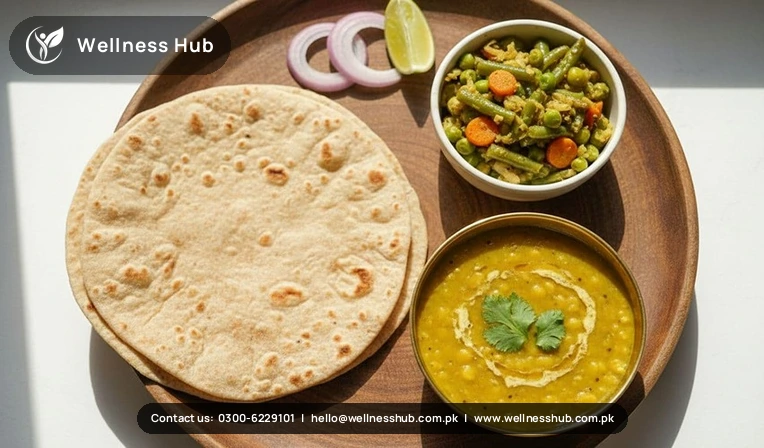
Roti made from whole wheat atta is already a whole grain. Keep it. Daal, lobia, channay, and rajma are excellent choices. Just go lighter on the oil in the tarka and watch the salt.
Dahi is your friend. A bowl of plain dahi with lunch gives you calcium and protein without the heaviness of rich gravies. Bananas, maltas, papayas, and guavas are cheap and full of potassium.
The real changes are in the extras. Achaar, papad, and packaged namkeen are sodium bombs. One spoon of achaar can carry a shocking amount of salt, so treat it as a garnish, not a side dish. Ready-made masala mixes hide a lot of sodium too. Cooking with fresh spices gives you the same flavour with a fraction of the salt.
And ghee. Nobody is asking you to abandon it. But a paratha swimming in ghee every morning is not doing your blood pressure any favours. Use less, or save the full version for the weekend.
The Salt Part Matters Most
If you change only one thing, change this. The average Pakistani eats far more salt than the body needs, and most of it is invisible. It is in the tandoori roti, the chips, the processed foods, the restaurant gravies.
The simplest version of the salt rule is this. Take the salt shaker off the dining table. Taste your food before adding salt while cooking. Flavour with lemon, dhania, podina, adrak, and lehsan instead. Your taste buds adjust in about two weeks, and then normally salted food starts tasting fine again.
Cutting back on soft drinks helps too. The sugar drives weight up, and extra weight pushes blood pressure up with it.
It Works Best With Movement
Food is half the prescription. A daily walk of thirty minutes lowers blood pressure on its own. Losing even a few kilos helps. Sleep matters more than people think, and so does stress.
DASH plus walking plus decent sleep is a combination that beats medication alone for many people with mild hypertension. And if you stay on medication, which you should never stop without talking to your doctor, the diet makes the medicine work better.
A Simple Way to Start
Do not overhaul everything on Monday. Start with the plate. Half of it sabzi or salad, a quarter protein like daal or chicken, a quarter roti or rice. Do that for lunch and dinner for two weeks and see how you feel.
Then tackle the salt. Then the sugary drinks. Small steps beat a dramatic plan that dies by Friday.
Your blood pressure did not rise in a week. It will not fall in a week either. But it will fall if the plate changes and stays changed.
If you want help building a DASH-style plan around your own kitchen and routine, Wellness Hub's online nutritionist sessions can map it out with you, one meal at a time.
Call us: 0300-6229101 | Email: hello@wellnesshub.com.pk | Website: www.wellnesshub.com.pk
One network. Infinite wellness.